

Water Damage Restoration
24 HR Water Removal & Restoration Services
- Water Damage
- Water Inspection
- Water Extraction
- Water Restoration
- Water Repairs
- 24/7 Response
- Insurance Approved
- 5 Star Rating
Your Local Water Restoration Company
- QUICK ANSWER
What is water damage restoration?
Water damage restoration is the process of removing water and drying the structure after a flood, leak, or pipe failure. It happens in two phases: mitigation (extraction, drying, and sanitizing) and restoration.
A typical 1,500 sq ft job dries in 3–5 days. Light, contained damage can dry in 2–3 days. We give you a realistic timeline on day one and update it as drying readings come in.
24–48 hrs
Call Professional Restoration Services For Immediate Response To All Water Emergencies.
Professional Restoration Services performs water damage restoration services in the Apex, Raleigh, Cary, Fuquay-Varina, Holly Springs, and the NC Triangle area. We respond 24 hours a day and 365 days a year including holidays. Water removal and extraction is important to complete as quickly as possible in your home so you can prevent future mold growth.
Professional Restoration Services provides water removal and extraction services to residential and commercial clients. We have our trucks completely stocked with drying equipment 24/7 and ready to respond as fast as possible to prevent further property damage. PRS will work directly with your insurance company to get your life or business back to normal as quickly as possible. We are insured and follow the industry standard set by the IICRC S500 and all our technicians are certified restoration professionals.
No matter the source, water damage happens fast. Property owners who call within the first few hours consistently see the lowest repair costs and the quickest timelines back to normal.
What Happens During Water Damage Restoration?
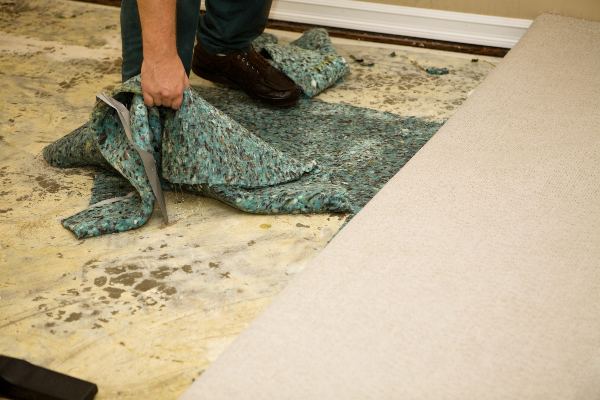
You want to remove any standing water as fast as possible in order to prevent any secondary water damage. Water takes the path of least resistance, so many times it is hard to track where the water spread. You can call Professional Restoration Services (PRS) to complete a water moisture detection in your home and begin the water removal process.
PRS trucks carry moisture meters, thermal imaging cameras, and truck-mounted extraction equipment. These tools help our technicians find water you can’t see from the surface, including water that has traveled into wall cavities, under flooring, or into crawl spaces.
Finding that hidden water matters. Water left in carpet, drywall, or subflooring for too long often means those materials have to be replaced instead of dried and saved. Our technicians work quickly to locate and remove water before it spreads further.
When To Call
7 Warning Signs of Water Damage
Hidden moisture does the most expensive damage. If you notice any of these, call before it spreads behind walls and under floors.
1. Musty or earthy smell
A persistent damp odor is often the first sign of moisture trapped in drywall, carpet pad, or subfloor.
2. Staining or discoloration
Yellow, brown, or copper rings on ceilings and walls mean water has already passed through.
3. Peeling paint or bubbling
Moisture behind a surface lifts paint and wallpaper and makes finishes blister.
4. Warped or cupping floors
Buckling hardwood or lifting laminate signals water soaking into the subfloor below.
5. A spike in your water bill
An unexplained jump often points to a slow hidden leak inside a wall or slab.
6. Signs of running water
Dripping or trickling when no fixtures are on usually means a pipe is leaking out of sight.
7. Visible mold mildew
Spots near baseboards, vents, or under sinks confirm an active moisture problem.
+ When in Doubt, get a free check
Our moisture meters and thermal cameras find what your eyes can’t. The assessment is free.
Our Water Damage Restoration Process
- You call our emergency 24-hour hotline – (919) 467-1991
- The on-call supervisor evaluates your water damage and dispatches certified technicians.
- Once we arrive on site we begin to stabilize the situation by shutting off the water, cutting off electricity, moving furniture and contents, or any other necessary so we can prevent secondary water damage.
- Certified technicians have finished the water removal process and the property is stabilized. They then begin drying the home or business. A mitigation plan and scope of work is discussed with the property owner and the insurance company.
- Once drying is complete, a project manager will prepare an estimate for your insurance adjuster.
Emergency Water Restoration
Water Damage on Your Ceiling
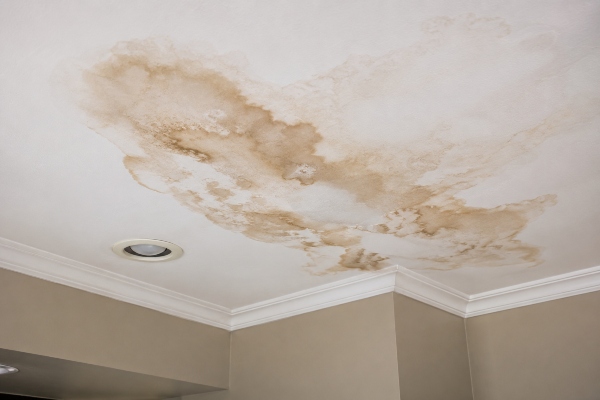
A stain on your ceiling is visible. What you cannot see is how far the water actually traveled before showing up there.
Water moves through wall cavities, runs along ceiling joists, and pools in insulation, often several feet away from the visible stain. Without moisture meters and thermal imaging equipment, there is no reliable way to know the full extent of the damage.
This matters because mold from ceiling leaks can develop within 24 to 48 hours of water intrusion. Mold growth behind your ceiling can spread silently without ever being visible on the surface. Professional restoration technicians use infrared cameras to locate wet areas behind walls and ceilings that appear completely dry, which is the key to making sure the problem is solved completely rather than just cosmetically.
Emergency Water Restoration
Causes
What causes water damage?
Burst & frozen pipes
Aging supply lines and cold-snap freezes split open and can release hundreds of gallons in an hour.
Appliance failures
Washing machines, dishwashers, and water heaters fail at the supply hose or tank, often while you’re out.
Storms & atmospheric rivers
Winter downpours overwhelm gutters and grading, pushing water under doors and through roofs.
Roof & window leaks
Failed flashing, cracked seals, and worn shingles let water track into ceilings and wall cavities.
Sewer & drain backups
Clogs and main-line failures push contaminated Category 3 water back into the home.
Slab & foundation seepage
Hydrostatic pressure and slab cracks wick groundwater into floors during the rainy season.
Understanding the Problem
Types of Water Damage
Restorers classify every loss two ways — by how contaminated the water is (the category) and how saturated the structure is (the class). Together they decide what can be saved, what must be removed, and how long drying takes.
| Category | Source | What it means |
|---|---|---|
| Cat 1 Clean | Supply lines, faucets, rainwater | Sanitary at the source. Most materials can be dried and saved if handled within 24–48 hrs. |
| Cat 2 Gray | Dishwashers, washing machines, sump pumps | Contains contaminants. Carpet pad and some porous materials usually removed. |
| Cat 3 Black | Sewage, river/storm flooding, toilet overflow | Grossly contaminated & hazardous. Porous materials are removed and the area is fully sanitized. |
Why this matters for your home: a clean Category 1 leak caught quickly is often a dry-in-place job. The same water left for three days can wick up drywall, soak the subfloor, and migrate into wall cavities — turning a $1,200 fix into a $6,000 one.
Category determines safety protocols; class (1 through 4) describes how much material is wet and how hard it is to dry. A small spill on tile is Class 1; saturated hardwood, plaster, and concrete is Class 4 and needs specialty low-grain-refrigerant dehumidifiers.
The 24-hour rule
Mold can begin colonizing wet materials within 24–48 hours. The single biggest factor in your final cost is how quickly water is extracted and drying begins — which is exactly why we dispatch a crew while you’re still on the phone.
Cost
How much does water damage restoration cost?
Minor & contained
Single room, clean Cat 1 water, caught early. Dry-in-place, no demo.
Typical home job
~1,500 sq ft, Cat 1–2 water, some drywall & flooring removed and replaced.
Major / Category 3
Multiple rooms or sewage. Full sanitation.
What you actually pay
When the loss is sudden and accidental, such as a burst pipe, a failed water heater, or a storm, it’s typically covered by your homeowners policy. In most cases you pay only your deductible.
We document everything and bill the carrier directly, so there are no surprises.
- Free, no-obligation inspection & estimate
- No after-hours or emergency-call fees
- Insurance claims assistance
- Written scope before any work begins
Does Home Insurance Cover Water Damage?
Many homeowners ask the question: does home insurance cover water damage. While each policy differs, one piece of guidance remains solid across the board – you are usually covered for sudden, accidental water damage losses. Your insurance company may even pay for water damage repairs if the corresponding loss affects the building materials.
You should note, that there are cases in which water damage may not be covered. These include:
- Floods.
- Water backups from sewers, drains, or septic systems.
- Water damage from unresolved maintenance issues.

We Work With Your Insurance Company
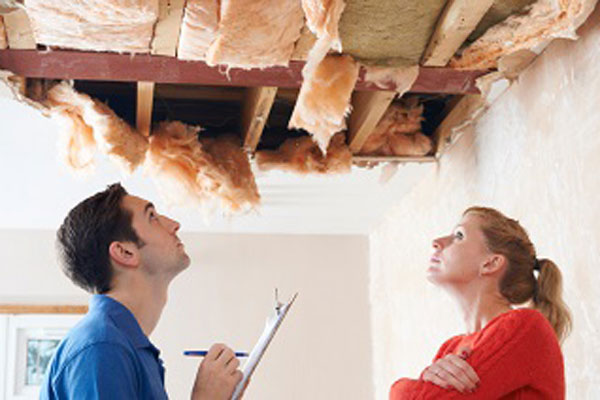
We work with every insurance company in the area. We will work with your insurance adjuster to get your home and life back to normal as quickly as possible. If you want more information about insurance and how to manage your insurance homeowners policy check out the Insurance Information Institute.
It’s important that your response is fast and doesn’t show any signs of negligence if you don’t want your insurance carrier to decline your property claim. If insurance can prove that additional property damage was done due to poor property maintenance and negligence your claim may not be covered. If you need water damage restoration services call us today.
Water Damage Restoration FAQs
You should call immediately. Water damage worsens by the minute—within 24–48 hours, mold can begin to grow, and structural materials like drywall and subflooring can start to deteriorate. Professional Restoration Services responds 24/7, 365 days a year, including holidays, to minimize damage and begin restoration as fast as possible.
Yes. PRS works directly with your insurance company throughout the entire water damage restoration process. We help document the damage, provide detailed estimates, and communicate with your adjuster to streamline your claim so you can focus on getting back to normal.
Our water damage restoration process includes an initial inspection and assessment, water extraction and removal, structural drying and dehumidification, cleaning and sanitizing affected areas, and full repairs to restore your property to its pre-loss condition. All work follows IICRC S500 industry standards.
Absolutely. All PRS technicians are IICRC-certified restoration professionals. We follow the industry standards set by the IICRC S500 for professional water damage restoration, ensuring your property is restored safely and thoroughly.
Yes. Professional Restoration Services provides water damage restoration for both residential homes and commercial properties throughout Apex, Raleigh, Cary, Fuquay-Varina, Holly Springs, and the NC Triangle area.
Yes. Standing water and excess moisture create the perfect environment for mold to develop, often within 24–48 hours. That's why fast water removal and professional drying are critical. PRS uses industrial-grade equipment to thoroughly dry your property and help prevent mold growth.
Water Damage Resources
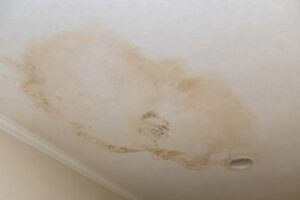
Water Damage on Your Ceiling? Here’s Exactly What to Do
Home/Blog/Ceiling Water Damage WATER & FLOOD Water Damage on Your Ceiling? Here’s Exactly What to Do PRS Professional Restoration Services Team●Updated June 1, 2026●8 min read QUICK SUMMARY A ceiling stain almost always means water has been sitting in the cavity longer than it looks. What you do in the first hour decides whether this

Sewage Backup in Your Home? Here’s What to Do Immediately
Sewage Backup in Your Home? Here’s What to Do Immediately A sewage backup is one of the most serious and hazardous problems a homeowner can face. Beyond the unpleasant odor and mess, contaminated water can quickly damage flooring, drywall, furniture, and personal belongings while exposing your family to dangerous bacteria and viruses. When sewage backs

What Your Homeowners Insurance Won’t Cover (And What to Do About It)
What Your Homeowners Insurance Won’t Cover& (And What to Do About It) Five Coverage Gaps That Leave North Carolina Homeowners Exposed After Disaster Strikes RALEIGH, NC – April 6, 2026 – Homeowners across North Carolina frequently ask the same question after disaster strikes: what does my insurance actually cover? It is rarely a straightforward answer,