

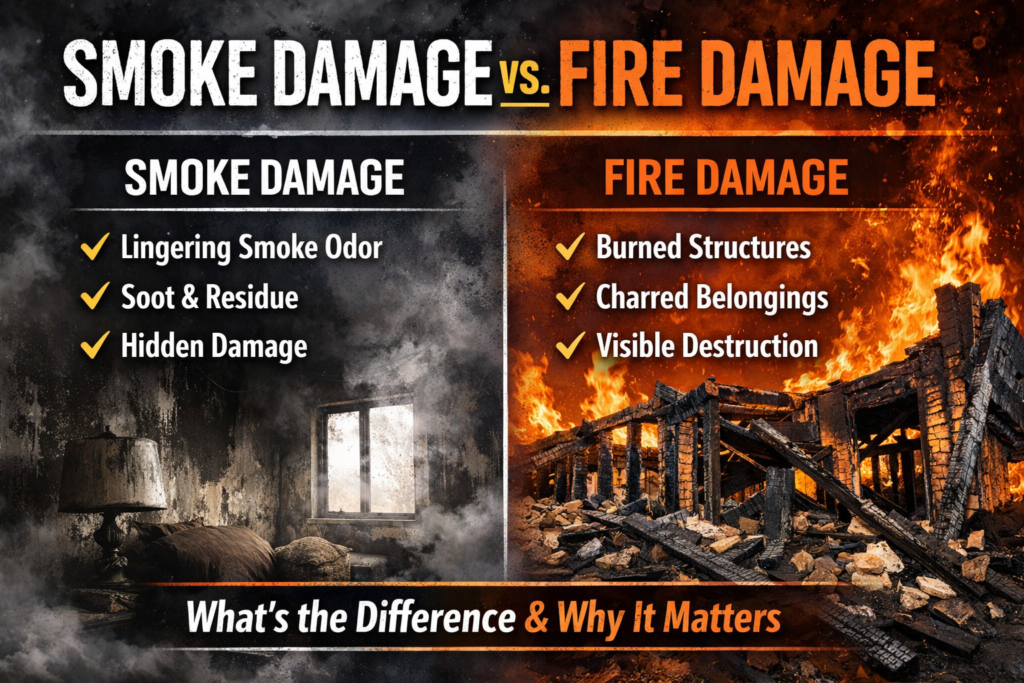
Smoke Damage vs. Fire Damage:
What’s the Difference and Why It Matters
When a fire occurs ina home or business, the visible flames are often just part of the problem. Even small fires can leave behind extensive damage that isn’t always obvious right away. Two of the most common forms of damage after a fire are fire damage and smoke damage. While they often occur together, they are not the same. Understanding the difference is critical for proper cleanup, restoration, and insurance claims.
What is Fire Damage?
Fire damage refers to the direct destruction caused by flames and extreme heat. This type of damage is usually easy to spot and often includes:
- Burned walls, ceilings, and structural framing
- Charred furniture and personal belongings
- Melted wiring, plumbing, and appliances
- Compromised structural integrity
Fire damage can weaken a building’s framework, making it unsafe to occupy until repairs are completed. In severe cases, reconstruction may be required to restore the property to pre-loss condition.
What is Smoke Damage?
Smoke damage is caused by soot, ash, and chemical residues released during combustion. Unlike fire damage, smoke damage can spread far beyond the area where the fire occurred, affecting rooms that were never touched by flames.
Common signs of smoke damage include:
- Persistent smoke odors
- Black or grey soot on walls, ceilings, and surfaces
- Discoloration of paint, fabrics, and flooring
- Corrosion of metals and electronics
- Irritation to eyes, throat, or lungs due to poor indoor air quality
Smoke particles are microscopic and can penetrate porous materials like drywall, insulation, upholstery, and HVAC systems, making smoke damage harder to eliminate without professional equipment.
Key Differences Between Smoke Damage and Fire Damage
While both result from a fire, the scope and treatment of each type of damage differ significantly.
- Visibility: Fire damage is typically obvious; smoke damage is often hidden.
- Spread: Fire damage is localized; smoke damage can affect the entire proeprty.
- Cleanup Method: Fire damage often requires demolition and rebuilding; smoke damage requires specialized cleaning, deodorization, and air purification.
- Health Risks: Smoke residue may contain toxic chemicals that pose ongoing health risks if not properly removed.
Why the Difference Matters for Restoration
Failing to address smoke damage properly—even when fire damage seems minor—can lead to long-term issues, including lingering odors, structural deterioration, and unhealthy indoor air quality. Professional restoration teams use specialized tools such as HEPA filtration, thermal fogging, and ozone treatments to fully remove smoke particles and odors.
Addressing both fire and smoke damage together ensures a complete restoration and helps prevent future problems.
Insurance Coverage Considerations
Most homeowners and commercial insurance policies cover both fire and smoke damage, but documentation matters. Smoke damage can sometimes be overlooked during initial inspections, leading to denied or insufficient claims later. Working with a professional restoration company helps ensure all damage is properly identified, documented, and submitted to your insurance provider.
What to Do After Fire or Smoke Damage
If your property has experienced a fire—no matter how small—it’s important to act quickly:
- Avoid touching soot-covered surfaces
- Do not run HVAC systems until inspected
- Ventilate only if advised by professionals
- Contact a licensed fire and smoke damage restoration company
- Prompt action can reduce secondary damage and speed up the recovery process.
Trust Professionals for Complete Fire and Smoke Restoration
Fire damage may be what you see, but smoke damage is often what causes lasting problems. Understanding the difference helps property owners make informed decisions and avoid costly mistakes.
If your home or business has been affected by fire or smoke, professional restoration ensures your property is cleaned, deodorized, and restored safely—so you can move forward with confidence.