


- FIRE & SMOKE
What to Do After a House Fire in Apex, NC: A Step-by-Step Recovery Guide
Professional Restoration Services Team●Updated July 31, 2026●8 min read
- QUICK SUMMARY
A house fire can leave behind much more than visible burns. Smoke, soot, water, and structural damage can continue affecting your home long after the flames are out. What you do during the first few hours can make a major difference in the recovery process.
- Make safety the priority. Never re-enter a fire-damaged property until the appropriate authorities have determined that it is safe.
- Document the damage. Take photos and videos of affected areas and belongings before cleanup begins, when it is safe to do so.
- Address more than the fire damage. Smoke, soot, water used to extinguish the fire, and lingering moisture can all create additional problems.
- Act quickly. The longer smoke, soot, and moisture remain, the more difficult they can be to remove.
- Know when to call a professional. Significant structural damage, widespread smoke or soot, water damage, or a homeowners insurance claim are all reasons to contact a professional fire damage restoration company.
A house fire is overwhelming, especially when you’re trying to figure out what to do next. Once the fire is extinguished, you may be left dealing with damaged walls, ceilings, flooring, furniture, personal belongings, and lingering smoke odors.
The good news is that fire damage restoration professionals can help you navigate the cleanup and recovery process.
This guide explains what Apex, NC homeowners should do after a house fire, what types of damage to look for, and when professional fire damage restoration is the right choice.
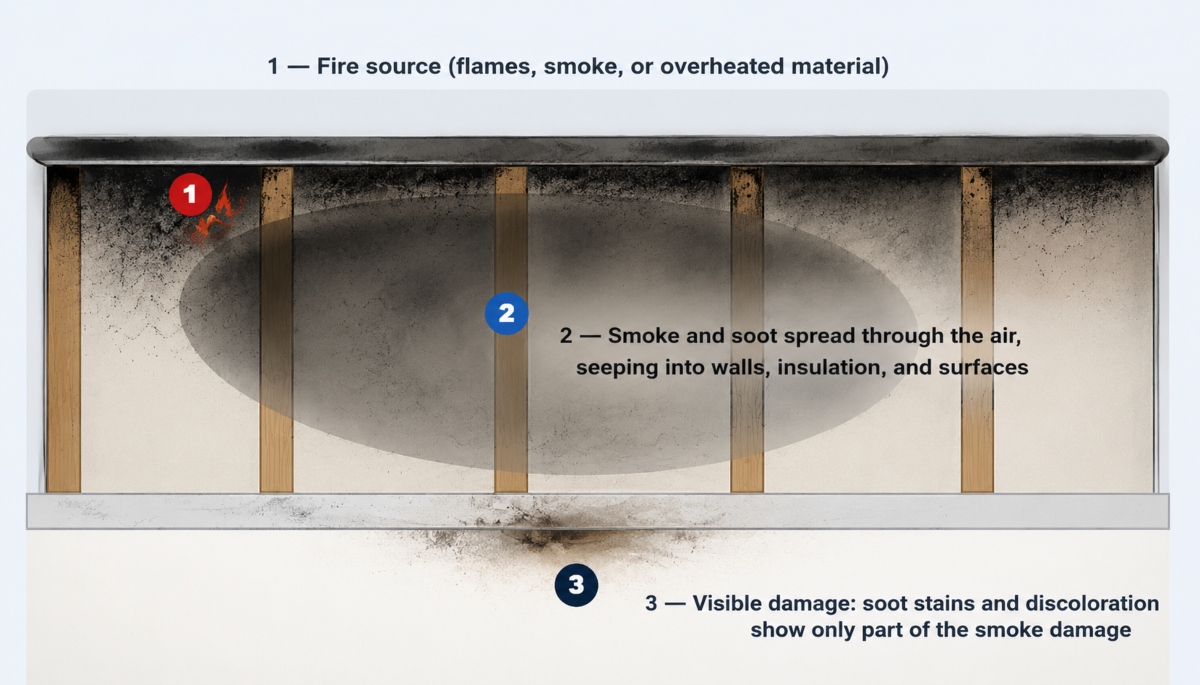
The visible soot stain is only part of the damage—smoke and soot can spread through wall cavities, insulation, and other materials far beyond what you can see.
01
What Types of Damage Can a House Fire Cause?
The flames themselves are only part of the problem. A fire can affect your home in several different ways, and some damage may not be immediately obvious.
Common types of fire-related damage include:
Fire and structural damage
caused directly by flames and extreme heat
Smoke damage
that affects walls, ceilings, flooring, and personal belongings
Soot residue
that can stain surfaces and cause persistent odors
Water damage
caused by firefighting efforts, sprinklers, or damaged plumbing
Odor damage
from smoke that has penetrated porous materials
Damage to personal belongings
including furniture, clothing, electronics, and other contents
- One important thing to understand: A small fire can still create extensive smoke and water damage throughout a home. Smoke can travel through HVAC systems and small openings, while water can move into flooring, walls, insulation, and other materials. That's why a professional assessment should look beyond the areas where the flames were visible.
02
What to Do in the First Few Hours After a Fire
The first priority after a house fire is keeping yourself and your family safe. Once emergency responders have cleared the property for entry, there are several steps you can take to begin the recovery process.
1
Make Sure Everyone Is Safe
Do not enter a fire-damaged home until it has been determined to be safe. Even when the flames are out, the structure may be unstable, electrical systems may be damaged, and hidden hot spots could remain.
- If the property has significant structural damage, stay out and follow instructions from emergency officials and other qualified professionals.
2
Contact Your Insurance Company
Notify your homeowners insurance company about the fire as soon as practical. Your insurer can explain your policy requirements and the next steps for documenting the loss.
Keep records of conversations, receipts, temporary living expenses, and other costs associated with the loss.
3
Document the Damage
When it is safe to do so, photograph and video the property before cleanup or repairs begin.
Document:
- Burned areas
- Smoke and soot damage
- Water damage
- Damaged furniture and belongings
- Appliances and electronics
- Damaged flooring, walls, ceilings, and cabinets
- Exterior and structural damage
Don’t throw away damaged belongings unless necessary for safety or instructed to do so. Your documentation can help establish the extent of the loss for your insurance claim.
4
Secure the Property
A fire can leave doors, windows, walls, roofs, and other parts of your home vulnerable to weather and unauthorized entry.
Depending on the condition of the property, temporary measures such as board-up services or roof tarping may be necessary to help protect the structure from additional damage.
5
Call a Fire Damage Restoration Company
The sooner fire restoration begins, the sooner the damage can be assessed and stabilized.
A professional restoration company can evaluate fire, smoke, soot, and water damage and develop a plan for cleaning and restoring the property.
03
The Hidden Damage Homeowners Often Miss
One of the biggest mistakes homeowners can make after a fire is focusing only on what they can see.
Smoke and soot can travel well beyond the room where a fire started. Smoke particles can settle on walls, ceilings, flooring, furniture, and personal belongings throughout the home.
Water presents another concern. Firefighters may need significant amounts of water to extinguish a fire, and that water can create secondary damage if it remains in the structure.
Moisture trapped inside walls, flooring, insulation, or other materials can contribute to additional deterioration and microbial growth.
That’s why fire restoration isn’t simply a matter of removing burned materials and repainting walls. A thorough restoration process considers the entire property and the different types of damage left behind.
3-5days
is the average time smoke can cause permanent damage to your home.
24seconds
is the average time between fire department calls.
70%
of water damage is caused by smoke and water, not the flame.
Why Smoke and Soot Need Professional Cleanup
Even when the fire damage is relatively contained, smoke and soot can create persistent problems.
Soot can leave dark residue on walls, ceilings, fixtures, and belongings. Depending on what burned, smoke residue can also contain acidic or corrosive compounds that may damage certain materials when left untreated.
Smoke odor can be especially difficult to eliminate because it can penetrate porous materials such as:
- Upholstery
- Carpeting
- Clothing
- Wood
- Drywall
- Insulation
- Mattresses
- Other soft furnishings
Simply airing out the house or using household cleaners may not completely remove the source of the odor.
Professional restoration technicians use specialized cleaning methods and equipment to address smoke residue and odors based on the type and extent of damage.
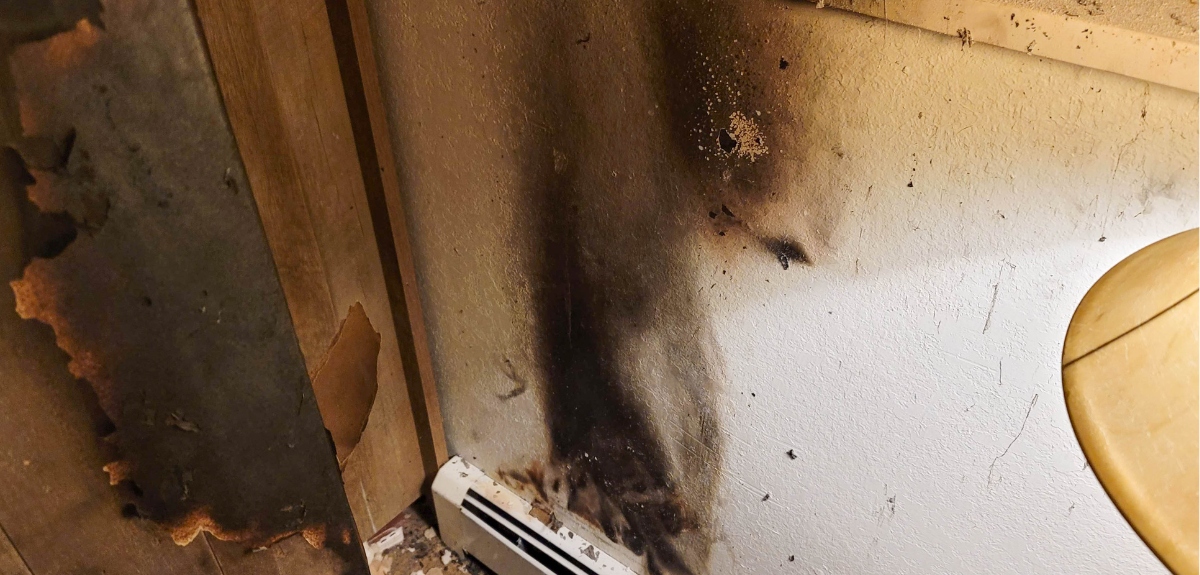
Smoke and soot can settle into walls, ceilings, and other surfaces, leaving behind hidden residue and odors that aren’t always visible to the naked eye.
04
Can You Clean Up Fire Damage Yourself?
Some minor cleanup may be possible after a small, contained fire, but homeowners should be cautious.
DIY may be OK
All must be true
- The property has been cleared as safe to enter
- There is little or no structural damage
- Smoke and soot damage is limited
- There is no significant water damage
- The affected materials can be safely cleaned
- You are not dealing with hazardous materials or contaminated debris
Call a pro
Any one is enough
- The fire caused structural damage
- Smoke or soot has spread throughout the home
- There is extensive water damage from firefighting
- Smoke odors remain after basic cleaning
- Walls, ceilings, flooring, or insulation have been affected
- Electrical systems or appliances may have been damaged
- Personal belongings require specialized cleaning
- Your are filing a homeowners insurance claim
- Professional restoration companies have specialized equipment and processes for addressing the different forms of damage caused by a fire. The goal isn't simply to make the property look clean. It's to identify the full extent of the damage, remove affected materials when necessary, clean salvageable contents and surfaces, and help return the property to a safe and usable condition.
05
Does Homeowners Insurance Cover Fire Damage?
Homeowners insurance policies commonly provide coverage for fire-related losses, but coverage depends on the specific policy and circumstances of the fire.
Your insurance company can explain what your policy covers and what documentation is required.
After a fire, keep detailed records of:
- Photos and videos of the damage
- Restoration and repair estimates
- Receipts for emergency expenses
- Temporary housing costs
- Damaged or destroyed belongings
- Communications with your insurance company
- Any emergency services performed
- Professional Restoration Services can also provide documentation of the damage and restoration work as part of the recovery process.
06
Get Professional Fire Damage Restoration in Apex, NC
A house fire can be one of the most stressful situations a homeowner faces, but you don’t have to manage the recovery process alone.
Professional Restoration Services helps homeowners in Apex, NC, and surrounding communities respond to fire, smoke, soot, and water damage. From the initial assessment and cleanup through the restoration process, our team can help you understand what needs to happen next.
If your Apex home has been affected by a fire, contact Professional Restoration Services for professional fire damage restoration services and take the first step toward getting your home back to normal.
Keep Reading
Related Guides

● sewage & biohazard
Sewage Backup in Your Home? Here’s What to Do Immediately
Sewage Backup in Your Home? Here’s What to Do Immediately A sewage backup is one of the most serious and hazardous problems a homeowner…
May 18 · 4 min

● Insurance
What Your Homeowners Insurance Won’t Cover (And What to Do About It)
What Your Homeowners Insurance Won’t Cover& (And What to Do About It) Five Coverage Gaps That Leave North Carolina Homeowners Exposed After…
April 23 · 5 min

● Storm Preparation
Storm Damage in Apex: How to Prepare Your Property for Hurricane Season
Storm Damage in Apex: How to Prepare Your Property for Hurricane Season Living in Apex means enjoying beautiful seasons, but it also means being …
April 17 · 6 min